

One plan, followed all the way to a reconciled claim.
A coordinator holds a budget, a roster holds a shift, and myplace holds a claim. Right now those are three different places to be wrong.
Konetic One carries one participant's plan from access approval through budget, service booking, shift, claim and reconciliation, so a coordinator, a finance officer and an auditor read the same record.

A coordinator, a finance officer and a support worker, reading the same plan.
This is written for the people who carry an NDIS registration day to day, the roster, the claim, the audit file and the person at the centre of all three. The plan, the shift and the payment are one record here, not three.
- Plan budgets, rosters and claims read from one participant record
- Support workers see only what the shift needs, on the phone in their pocket
- Audit evidence assembles as the work happens, not the week before
Before a shift is ever rostered, the plan has already made promises.
An access request, a plan approval and a service agreement set the boundaries every later stage has to respect, the categories, the budget, the management type. Konetic One holds that plan as the anchor record everything else attaches to, from the first shift to the final review.
Tick the ones you live with every week
None of this is a training problem. It is what happens when the roster, the plan, the claim and the government portal were never designed to talk to each other.
Someone spends the week reconciling three systems by hand, and mistakes only surface when a claim bounces.
The shift, the note and the claim line are the same record, so there is nothing to reconcile because nothing was ever split apart.
One workspace where a plan balance and a PACE claim are the same conversation.
Coordinators watch the budget burn down against the plan period, finance officers watch each claim line move from delivered shift to reconciled payment. Both views are drawn from the same shift record, minutes apart.
Burn is tracking one point ahead of the straight line pace for the plan period. Transport is the category to watch.
Audit readiness as a by product of the daily record, not a quarterly scramble.
A registration or renewal audit against the NDIS Practice Standards touches governance, workforce, participant rights, the support environment and, for many providers, high intensity daily personal activities. Konetic One tags every care plan, training record, complaint, supervision note, incident and outcome to the Standard it evidences, as it is created.
- Evidence folder assembled continuously, exportable on demand for an approved quality auditor.
- Gaps surfaced as they open, a lapsed policy review or a missing supervision record shows immediately.
- Corrective actions from incidents or complaints link back to the Standard they close out.
Consent, complaints, feedback, risk register, incident policy, conflict of interest declarations, all timestamped against the record that generated them.
Service agreements, support plans, transition and exit records, and access to supports evidence linked to the participant timeline.
SIL and SDA premises records, safety checks, emergency and disaster management plans held against each site.
Competency records for tracheostomy, enteral feeding, subcutaneous injections and other complex supports, mapped to the workers cleared to deliver them.
A roster that already knows the award, before a shift is offered.
The Social, Community, Home Care and Disability Services Industry Award sets classification levels, weekend and public holiday loadings, broken shift allowances, sleepover rates and minimum engagement periods. Konetic One applies these as a shift is built, so the offered shift, the delivered shift and the pay run agree.
- Award interpretation applied at roster build, not discovered at payroll reconciliation.
- Broken shift and minimum engagement rules checked before a shift is published to a worker.
- Sleepover and active night shift rates distinguished automatically by shift type.


A roster is a promise made to a participant and to a support worker.
SCHADS breaks, minimum engagements, broken shifts and travel are not payroll trivia. They decide whether a worker stays and whether a participant sees the same face next week.
- Award interpretation applied as the roster is built, not after payroll
- Continuity of worker tracked against each participant, not just hours filled
- Unfilled and high risk shifts visible to coordinators the day before

The handover happens twice, once around the table, once inside the record.
A roster can put the right worker on the right shift. What carries a participant's week forward is whether the last support worker's note, the coordinator's plan update and tonight's shift are the same conversation, not three separate ones.
- Progress notes visible to the next rostered worker before the shift starts
- Coordinator changes to a support plan reach the roster without a separate email
- A debrief about risk or a changed routine attaches to the participant record, not a sticky note
Three settings, one record.
A shift can be a kitchen table, a footpath, or a desk with a spreadsheet of claims to reconcile. Each one produces the same kind of evidence, written once.

Run a real NDIS workflow, step by step
This is not a video. Work through the same sequence your team runs, and watch what the record produces at each step.
The shift record captures start, finish, travel and the support item, matched automatically to the participant's plan category.
- Shift closed with travel logged
- Support item auto matched
The notification clock starts at the moment of occurrence, not the moment of paperwork.
A reportable incident under the NDIS Quality and Safeguards Commission carries a strict notification window, and an authorised restrictive practice has its own separate reporting cycle. Konetic One classifies the event, starts the correct clock, and keeps the register live across every site.
Reportable incident, immediate category
Death, serious injury, unauthorised restrictive practice with immediate risk
Reportable incident, standard category
Abuse or neglect, unlawful sexual or physical contact, sexual misconduct
Restrictive practice, authorised
Use of an authorised restrictive practice recorded against the behaviour support plan
Internal register only
Near misses, minor injuries, complaints below the reportable threshold
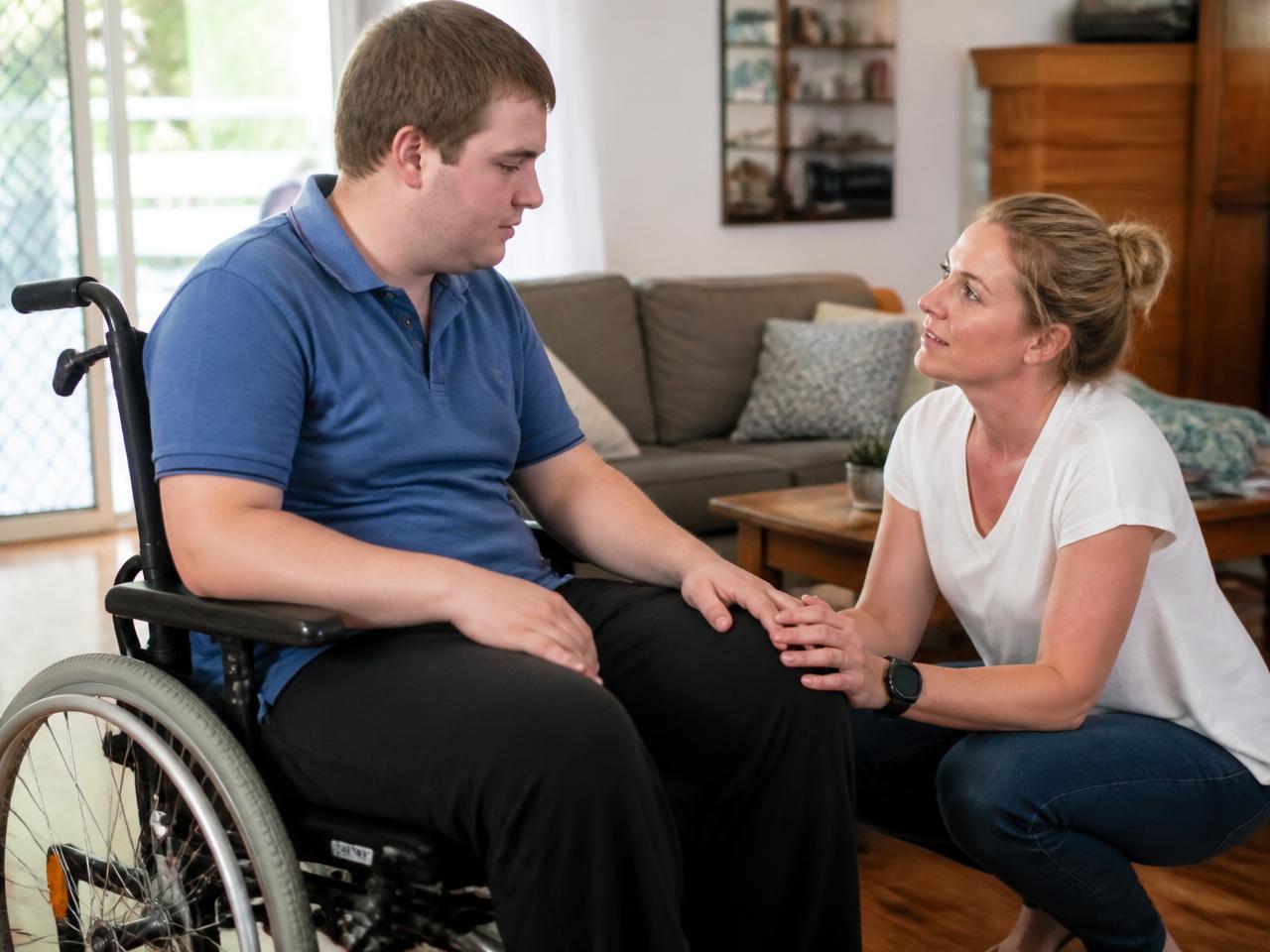
Reportable incidents are about a person, long before they are about a form.
The Commission expects notification timeframes, evidence and follow up. The participant expects to be heard and safe. One record should serve both without asking a worker to write the story twice.
- Guided capture that meets Commission notification timeframes
- Restrictive practice authorisation and expiry tracked against the person
- Follow up actions, review outcomes and lessons kept with the original report
An expired credential should never be discovered on the doorstep.
The NDIS Worker Screening Check, the NDIS Worker Orientation Module, first aid, CPR, vehicle insurance and role specific competencies such as manual handling or medication administration all expire on their own schedules. Konetic One checks every one of them at rostering and again at shift sign on.
- A worker with an expired screening check cannot be rostered against a participant.
- Expiring credentials surface to the workforce team weeks ahead, not the morning of the shift.
- Role specific competencies, high intensity supports included, gate which shifts a worker can accept.
A claim is a formality when the plan, the booking and the shift already agree.
PACE replaced the legacy NDIS business system with a plan centred claiming model built on service bookings. A claim that looks right on the roster can still fail because the booking, the item and the plan disagree. Konetic One removes the disagreement before the claim is built.
Bulk payment requests built from delivery
Every claim line is drawn from the shift record a support worker closed, not re-keyed from a spreadsheet, so the numbers submitted match the numbers worked.
Price Guide and booking pre-flight
Support item, rate, quantity and service booking balance are checked against the current NDIS Pricing Arrangements and Price Guide before the file leaves the building.
Remittance matched line by line
The Agency response is matched back to the originating shift, worker and support item, and any variance drops onto a reconciliation worklist the same day.
| Pre-flight check | What it catches | Where it resolves |
|---|---|---|
| Price guide currency | Rate no longer matches the current Price Guide version | Support item on the shift record |
| Service booking balance | Claim would exceed remaining reserved funds | Service booking |
| Plan alignment | Support item not covered by the current plan or category | Plan or service agreement |
| Travel and cancellation | Travel claimed without an eligible support, or cancellation outside window | Shift record |
The claim is decided in the conversation, not in the payment run.
Most rejected claims start days earlier, when a booking, an item and a shift quietly disagree. When coordination and finance work from one record, the disagreement surfaces while someone can still fix it.
- Plan, service booking and delivered shift reconciled before submission
- Item and price guide checks applied at the point the shift is approved
- Rejections traced back to the shift and the person who can correct it
A reconciled claim is not the same question as a viable service.
The Price Guide sets the ceiling a provider can charge, not the cost of delivering the support. A claim can be paid in full and the shift can still have lost money, once wages, on-costs, travel and the overhead of running a house or a clinic are counted. Konetic One holds the cost side of the ledger against the claimed side, by support item, so a coordinator can see which lines carry the service and which ones are quietly subsidised by them.
Support coordination
What eats the margin. Coordinator wage, travel between participants, admin time writing case notes.
Illustrative demo figures, drawn from a Price Guide line against a modelled fully loaded cost. A provider connects their own award rates, on-costs and overheads, and the same view runs on every support item they deliver, not just the six shown here.
Travel between shifts, cancellations inside the notice window, and sleepover loadings that a fixed SIL price never fully covers.
Roster hours, travel kilometres and coordination time roll up against each participant's plan, not just their claim total.
Higher margin support items, coordination and allied health among them, are visible against thinner ones, so a service mix decision is made with numbers, not instinct.
A progress note that points at a goal is worth more than a paragraph of prose.
Support plans set out strategies, risks and, where relevant, behaviour support content agreed with the participant, family and allied health team. Konetic One structures every subsequent progress note against a named goal, so progress over a plan period is a trend a coordinator can actually read.
- 01
Goal setting
Participant, family and coordinator agree outcomes in plain language, linked to plan support categories.
- 02
Support plan drafted
Strategies, risks and behaviour support content drafted with the allied health team where relevant.
- 03
Progress notes
Every shift closes with a structured note against a goal, not a free text paragraph nobody reads again.
- 04
Review evidence
Goal progress, incidents and satisfaction feed the plan review conversation and the next service agreement.

The participant, the family and the coordinator all looking at the same twelve months.
Goal progress, delivered hours, incidents and satisfaction arrive at the review already assembled, so the meeting is spent on what the next plan should fund rather than on reconstructing what happened.
Goal progress, incident history and satisfaction feed directly into the next plan review conversation, drawn from the record rather than reconstructed from memory.

Why the admin mattersEvery hour returned to a support worker is an hour that goes back to the person they support.

Why the record mattersEvery field in this platform exists because someone is waiting on the other side of it, a participant, a family, a support worker at the door.
Ruby grows quietly around the plan, it never sits between the worker and the participant.
Ruby is the living layer underneath Konetic One, noticing a plan balance drifting toward exhaustion, a credential about to lapse, or a reportable incident approaching its notification deadline, and surfacing it to the right person before it becomes a problem. It works the way growth works, continuously, in the background, never announced with an alarm.
- Notices a service booking balance thinning ahead of the plan review, before a claim is rejected.
- Surfaces an expiring worker credential to the workforce team weeks ahead of the shift it would block.
- Tracks a reportable incident toward its notification deadline and nudges the owner, not the whole team.
What this looks like at your size
Move the sliders to your service. The figures below are the recurring administrative hours that come out of the plan, the roster and the claim being one record, not a savings promise.
Set to zero if you do not run supported independent living.
PACE re-keying, chasing budget balances, assembling audit evidence.
Across your support worker and coordinator workforce, before any change.
Assuming a conservative 40 percent of that admin is duplication the single record removes.
Support item lines carrying their own pre-flight check rather than a manual review.
SIL and community shifts with screening and competency checks applied automatically.
These are indicative and deliberately conservative. We would rather build the model with your real roster and claim data in a working session than publish a number that flatters us.
The questions providers actually ask us
Search the awkward edge cases. If a straight answer is no, or it needs configuration, that is what you will read.
Running an NDIS service in Australia, in plain terms.
Practice Standards and Commission registration
Every registered NDIS provider is audited against the NDIS Practice Standards set by the NDIS Quality and Safeguards Commission, spanning governance and rights, the way supports are actually provided, the environment they are delivered in, and, for providers cleared to deliver complex care, high intensity daily personal activities such as tracheostomy care or enteral feeding. The common failure point is not a missing policy, it is a policy nobody can prove was followed on a given day. Konetic One tags governance, workforce and support delivery evidence to the relevant standard as the record is created, so an auditor is reading a live export rather than a folder assembled the week before the visit, see compliance evidence.
PACE, the Price Guide and claiming
Since the transition to the PACE computer system, claims are lodged through the myplace provider portal against a participant's plan, matched to a service booking and validated against the current NDIS Price Guide line items and travel and non face to face provisions. A line that does not match the booked support item, the price cap or the remaining plan balance is rejected, and providers who claim in bulk without checking each of those first often only find out weeks later, deep inside a reconciliation spreadsheet. Konetic One runs that validation before the claim leaves the building, and matches the remittance back to the originating shift automatically, see finance and claiming.
SCHADS award rostering
Most direct support workforce is employed under the Social, Community, Home Care and Disability Services Industry Award, with weekend, evening and public holiday loadings, broken shift allowances, minimum engagement periods and sleepover allowances that all change the true cost of a shift before it is even worked. A roster built without those rules applied is a pay run reconciliation problem waiting to happen, and a participant plan budget forecast that will not survive contact with payroll. Konetic One applies award rates and loadings as the roster is built, so the rostered cost and the paid cost are the same number, see rostering.
Restrictive practices and behaviour support
Use of a restrictive practice, whether chemical, mechanical, physical, environmental or seclusion, must be authorised under state or territory law and recorded against a behaviour support plan, then reported to the NDIS Commission on the regular reporting cycle. Providers commonly lose track of which authorisation is current for which participant across a large roster of casual and part time staff. Konetic One links every recorded use of a restrictive practice to a current authorisation and behaviour support plan, and rolls authorised use into the reporting cycle automatically, see regulatory reporting.
Reportable incidents
The NDIS Commission sets a strict 24 hour window for reportable incidents in the immediate category, such as death or serious injury, and a 5 business day window for the standard category, such as abuse, neglect or unlawful contact. A provider that discovers the clock has already run out because an incident sat in someone's inbox has a compliance problem that is entirely avoidable. Konetic One classifies the incident against the Commission's categories the moment it is logged and starts the correct notification clock immediately, see workflow automation.
What an NDIS provider must do, and where it lives in the platform.
| What the sector must do | How Konetic One does it | Platform feature |
|---|---|---|
| Prove Practice Standards evidence during an audit | Tags governance, workforce and support evidence to the standard as it is created | Compliance evidence |
| Submit and reconcile PACE claims against the Price Guide | Pre-flight checks every line, then matches remittance back to the shift | Finance and claiming |
| Pay staff correctly under the SCHADS award | Applies award rates, loadings and minimum engagement as the roster is built | Rostering |
| Track restrictive practice authorisations and reporting | Links use to a current authorisation and behaviour support plan automatically | Regulatory reporting |
| Meet reportable incident notification windows | Classifies the incident and starts the 24 hour or 5 business day clock instantly | Workflow automation |
| Verify Worker Screening Checks before a shift starts | Blocks a shift where a credential has lapsed, rather than flagging it afterwards | HR and credentials |
| Give participants and families visibility of their own plan | A branded portal shows shifts, notes, budgets and goals in real time | Client portal |
| Get service agreements and consent signed without paper | Documents are sent, signed and stored against the participant record | Digital signatures |
| Surface plan and compliance risk before it becomes a problem | Ruby watches plan balances, expiring credentials and due dates as they arise | Ruby |
Five topics worth reading in full before the walkthrough.
Each deep dive stands on its own, with the operating detail, the failure modes and the workflow behind it.
Bring a real plan. We will show you the record it produces.
The question worth asking a platform is not whether a screen can store a note, it is whether the platform can carry a participant from goal to service agreement to a reconciled claim without anyone rekeying the same fact twice.
See plan utilisation, claim rejection rate, Standards coverage and incident exposure in one view.
Carry the participant from goal to service agreement to delivered shift without rekeying.
Live Practice Standards evidence and reconciled PACE claims side by side.
Roster against valid credentials, log shift notes, travel and outcomes in one place.
Plain answers for serious buyers.
“You get to know someone's week, not just their file, and the system should know that too.”
Bring one real participant plan. We will map it through Konetic One.
Test the hard parts, plan budget, PACE claim, SCHADS roster, worker screening, reportable incident and Practice Standards evidence.