

One record, spoken in the language the person in front of you actually uses.
A settlement team runs arrival support, casework, interpreting, translated documents and community programs across people who each carry a different language, dialect and set of consents.
Konetic One holds it as one client record that the worker reads in structured English, the client reads in their own language, and the funder reads as counts, from the same underlying data.
Seven service lines, one record underneath every one of them
From an arrival day at the airport to a home care visit delivered years later, this is the work, expressed in the worker's own language, mapped to the surface that carries it and the evidence it produces.
A caseworker meets a humanitarian entrant at arrival under the Humanitarian Settlement Program, runs a needs assessment across housing, health, education, employment, English and social participation, then hands over to ongoing SETS case management once early settlement is stable.
Visa subclass, grant date and household composition captured once, shared across the whole team from day one.
SETS needs domains and goals travel from the HSP worker to the SETS case manager without a handover note being the only record of what happened.
Every appointment, a Medicare registration call, a tenancy meeting, a school interview, needs the right language, the right dialect and sometimes a gendered interpreter, booked through TIS National or an on-site panel, and billed back to the funded program.
Preferred language, dialect, script direction and gendered preference sit on the client record and populate every booking automatically.
Mode, duration and cost are logged against the contact and the funded program the moment the booking is made, not reconstructed from an invoice later.
A case plan, a consent form or a program brochure has to exist in a language the client can actually read, and the organisation has to be able to show which translated version was in front of the client when they signed.
Each translated version of a document is attached to the client record with the date it was used and who translated it.
Consent is recorded against the language it was given in, with expiry, so informed consent can be evidenced rather than assumed.
Bicultural workers carry language skill, cultural knowledge and community standing that a generic qualification field never captures, and a team leader needs to match the right worker to the right household without guessing.
Language, dialect and cultural skills sit alongside qualifications in workforce records, filterable when a new household needs a match.
Cultural competency training and supervision are tracked the same way as any other professional development requirement.
A citizenship information session, an English conversation group, a women's health morning, all delivered to a room rather than one client at a time, still need to count toward the same outcomes as individual casework.
Group activity is logged once, with attendance linked to individual client records where consent allows.
Group participation feeds the same outcome domains as individual case goals, so a program is not invisible in the reporting.
Skills recognition, vocational English, a Workforce Australia referral and a job placement can take two years to land, and an open loop left unattended for months is how a good outcome quietly disappears.
Every referral is tied to the employment goal it serves and tracked from referral to placement, with status visible to whoever owns it.
Placement and skills assessment activity exports against state and Commonwealth employment program requirements.
An older migrant needing home care, or a person with disability needing NDIS support, still needs that care explained and delivered in the language they are most comfortable in, including torture and trauma informed health referrals.
Care plans and health referrals carry the client's preferred language and interpreter mode so the right support turns up at the right appointment.
Sensitive health flags can be restricted to roles with a need to know, while the follow up task stays visible to whoever owns it.

A caseworker's first weeks are spent in loungerooms, not spreadsheets
Medicare registration, a school enrolment, a housing inspection, an interpreter arriving right on time. None of that happens at a desk, so the record has to be built for a phone in a lounge room, not only for an office terminal.
The same client record, spoken to three different people
Pick a client's language below. Watch what changes for the worker, what changes for the client, and what changes in the funder report, and notice that it is not the same thing for each of them.
- Client
- Amina H., household of four, HSP to SETS handover
- Preferred language
- English, No interpreter required
- Interpreter booked
- None booked
- Next contact
- Case review, Tuesday 10:30am
- Consent on file
- Health referral shared with Refugee Health Clinic, expires 12 September
The worker's fields do not change shape when the display language changes. Only the language and interpreter fields update, because that is what actually changed.
Hello Amina, here is your next appointment
Case review, Tuesday 10:30am
An interpreter is booked for this appointment. You do not need to arrange one.
You agreed to share your health referral with Refugee Health Clinic on 12 March.
Confirm attendance- This client's language
- Counted once, under English
- Interpreter cost this contact
- $0.00
- Languages on this quarter's caseload
- 31 distinct languages, 9 dialects flagged separately
- Consent basis reported
- Purpose limited, time bound, matches the consent on the client record
The report counts the language, the dialect and the interpreter cost. It never carries the client's name or the content of the conversation.
Switching the language changed what nobody reads and what the interpreter ledger records. It did not change what the worker sees or what the funder counts. That separation is the point.

A family that has already explained itself at a border should not have to explain itself at every service door.
None of this is a training problem
It is what happens when SETS, HSP and community programs were funded separately and never designed to share a record. Select the ones you recognise.
Select the ones you recognise. We will name the part of Konetic One that removes each.
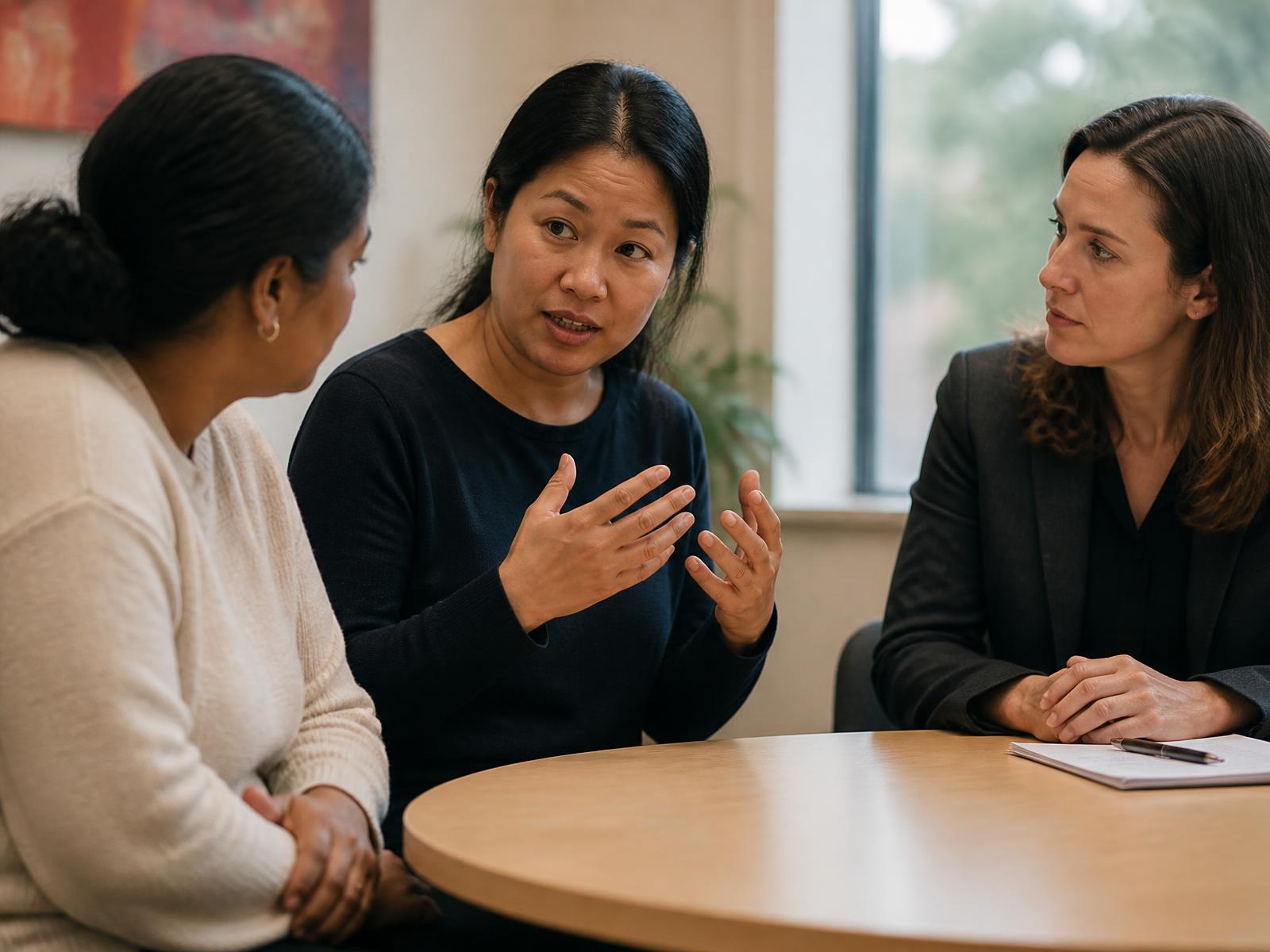
The caseworker and the person they are working with
Two people are looking at the same household record at the same time. What each of them needs from it is different.
The caseworker holds the whole arc, not a slice of it
A caseworker moving a household from Humanitarian Settlement Program arrival support into ongoing SETS case management needs the visa evidence, the interpreter history and the goal plan to travel with the client, not sit in three separate systems.
- Visa subclass, grant date and household composition carried as structured fields from day one
- Interpreter bookings, mode and cost visible on the client contact, not reconstructed from an inbox
- Referral status visible across the team, so a stalled referral surfaces before the client has to chase it
A family should not explain itself at every service door
A newly arrived family has already told their story to a border official, a caseworker and a health service before their first month is out. The client portal renders in the language recorded on their file, so the fifth service door does not ask again from scratch.
- Appointments, referral status and consent history shown in the client's own language
- An interpreter is already booked before the client has to ask for one
- Consent is asked for once per purpose, not re-explained at every new service


SETS, HSP, DEX and state grants, answered rather than described
Every obligation below is real. Open it to see the surface that carries it and the evidence it produces.
Needs assessment domains, goals and case activity are captured inside the case conversation as it happens.
A needs assessment and goal plan that reconciles to the DSS Data Exchange domains at audit.
Visa subclass, grant date and household composition are structured fields carried through the handover to SETS.
An arrival to citizenship record a funder or reviewer can trace without a separate handover file.
Client, session and partnership approach SCORE data are captured as work happens, mapped to outlet and program activity.
A validated extract per program and organisation identifier, produced as a review step rather than a project.
Interpreter mode, duration and cost are logged against the client contact and the funded program automatically.
An interpreter cost ledger that reconciles to TIS National or panel invoices program by program.
Consent is recorded per purpose and per party, in the language it was given, with expiry.
A consent history on the client record, exportable if it is ever questioned.
Group sessions and community events are logged once and mapped to the relevant grant activity.
An activity report drawn from the same record used for delivery, not rebuilt for the acquittal.

A conversation class is settlement work too
AMEP referral and level placement, vocational English and a Tuesday conversation group all feed the same social participation domain a funder reports against, so a community program is not invisible next to individual casework.
Ruby catches the dialect gap before the client does
Ruby is the only named AI capability on this platform. It works inside the record you already keep, and it does one concrete thing for this sector at a time.
Flags the missing dialect before the booking is made
When a caseworker books an appointment, Ruby checks the language and dialect already on file and flags it if the interpreter panel search does not match, before the booking is confirmed.
Finds the DEX gap before the quarter closes
Ruby reads the period's session and SCORE data against the DSS Data Exchange domains and flags the ones running short while there is still time to record them properly.
Drafts the referral letter, in the language it needs to travel in
Ruby drafts a referral summary in the language the receiving service and the client both need, and leaves every word editable before anything is sent.
Five settlement workflows worth reading in full
Each deep dive covers one operating reality in detail, from SETS case management to community employment pathways.
SETS case management
SETS funds providers to help humanitarian and eligible migrant entrants build the skills and connections to participate in Australian life. The program lives or dies on whether a needs assessment actually leads somewhere, and whether the next worker who picks up the file can see what already happened.
Read the deep diveDEX reporting
The DSS Data Exchange is the reporting backbone for most Commonwealth community services funding, including SETS. Providers that treat DEX as a monthly export exercise spend days reconciling client counts against session logs. Providers that build it into the case record spend minutes.
Read the deep diveInterpreting and translation
Language access is not a courtesy line item, it is the difference between informed consent and a signature nobody understood. Providers need to know which language a client actually needs, which interpreter attended, and which version of a document was in front of the client when they agreed to it.
Read the deep diveVisa and eligibility evidence
The Humanitarian Settlement Program covers the first intensive months after arrival, orientation, housing set up, Medicare and Centrelink registration, school enrolment, and the early health check. Getting eligibility evidence wrong at intake creates problems that surface much later, often at the point a client needs to prove entitlement to a service.
Read the deep diveCommunity and employment pathways
SETS funds more than one to one case management. Community capacity building activities, employment pathway support, and referral into refugee health services are just as core, and just as easy to lose when they sit in separate spreadsheets instead of the client and community record.
Read the deep diveRunning a settlement and multicultural service in Australia
The funding, reporting and workforce realities behind arrival to citizenship work, and what Konetic One does about each one.
Settlement services and SETS reporting
Settlement Engagement and Transition Support is delivered against a needs assessment and goal plan, with activity reported into the DSS Data Exchange each quarter. Providers running SETS alongside the Humanitarian Settlement Program are also carrying partnership approach SCORE outcomes, outlet and program mapping, and consent for data sharing, all of which has to reconcile back to the same client at audit. Konetic One captures SETS needs domains, goals and SCORE inside the case conversation, so the regulatory reporting extract is a review step rather than a rebuild.
Interpreting, translation and language access obligations
Services funded under Commonwealth and state agreements carry a language access obligation, generally met through TIS National or an on-site interpreter panel, with mode, duration and cost recorded against the funded program for reconciliation. A missed booking or a wrong dialect is a compliance gap the moment a client cannot understand their own case plan. Konetic One carries preferred language, dialect, script direction and gendered interpreter preference on the client record and surfaces it automatically on every appointment through appointments and communications.
Humanitarian entrant support and refugee health
Humanitarian entrants arrive with a visa subclass, grant date and household composition that drive eligibility for HSP, Medicare, income support and the initial health assessment, including screening for torture and trauma related needs. Konetic One holds visa and eligibility fields as structured, filterable data, with household links maintained through CRM and partnerships and every referral tracked to a documented outcome in workflows.
Cultural competency and bilingual workforce
Multicultural services depend on bilingual and bicultural workers whose language skills, cultural knowledge and community standing are as much a rostering asset as a qualification. Konetic One rosters staff against language and cultural skills as a first class attribute in HR and rostering, so the right worker is matched to the right household.
What this sector must do, and how Konetic One does it
| What this sector must do | How Konetic One does it | Feature |
|---|---|---|
| Run a needs assessment and goal plan across SETS domains | Structured intake against the standard SETS domains, feeding case notes and goals directly | View |
| Book and reconcile interpreters for every contact | Interpreter mode, duration and cost logged to the client and funded program automatically | View |
| Produce a validated DSS Data Exchange extract each quarter | Sessions, SCORE and outlet activity captured as work happens, exported per program | View |
| Hold visa, eligibility and household evidence for audit | Visa subclass, grant date and family composition held as structured, queryable fields | View |
| Translate and version control client facing documents | Translated documents attached per household member with version history retained | View |
| Roster bilingual and bicultural workers against demand | Language, dialect and cultural skills matched to caseload inside rostering | View |
| Track community capacity building alongside case work | Group sessions and events linked to individual client goals where consent allows | View |
| Give funders and boards a live view of settlement outcomes | Dashboards built from the same record used for casework, no separate reporting build | View |
Questions settlement and multicultural service providers ask

We were the family with too many forms and one interpreter. Now we are just the family two doors down.
See your settlement caseload in Konetic One
Bring a real caseload, a real DEX period and a real interpreter bill. We will show you what changes.