Konetic One Australian Community Services Management Platform Logo
A mental health clinician and a client talking in a calm, light filled Australian community health room
Mental health and psychosocial support

Stepped care that holds together from first contact to discharge.

Community mental health teams move people up and down a ladder of intensity, from a guided low intensity program to acute post crisis follow up, often within the same week.

Konetic One carries intake, outcome measures, safety planning, session activity and PMHC MDS reporting on one client record at every rung of that ladder, so a step up or step down is a clinical decision rather than a data reconciliation exercise.

Book a walkthroughMental health platform detail
4 stepped care tiers on one recordK10, K5 and HoNOS scored in sessionPMHC MDS built from delivered activity
A mental health clinician listening closely to a young adult client in a light filled Australian counselling room
Who this is for

A person in a chair, not a caseload number.

Every stepped care tier, every outcome measure and every safety plan exists because someone sat down and said what was actually happening for them. Konetic One is built so that conversation gets recorded once, accurately, by the person who was in the room.

Active episodes
776
Sites live
12
Outcome pairs held
89%
Model of care

Stepped care that actually steps.

Every tier below climbs in intensity and in what a service must hold onto. Each has its own intake criteria, session expectation and review point, and each is where a specific governance, reporting or safety obligation actually lives.

Step 1 and 2 · Intake and low intensity

Low intensity

Mild presentations, self referral, digital and guided support, brief intervention.

Self referral intake with K10 and K5 captured on entry, guided low intensity sessions, session caps monitored, automatic review point before the cap is reached.

412
Active episodes
4 days
Median wait
96%
Reviewed on time
Systems

Intake sits in one system, the clinical record in another, and outcome measures in a spreadsheet nobody trusts.

In Konetic One. Intake, the episode, session notes and outcome measures sit on one consumer record from the first referral, so nothing is retyped and nothing drifts.

Portals

PMHC MDS is a separate login where someone re-keys what is already in the clinical file.

In Konetic One. PMHC MDS fields are validated as the episode runs, and the extract is produced from the same record the clinician wrote into, not a parallel entry.

Reporting streams docked at intake
  • PMHC MDSPHN commissioned services

    Consumer, episode, session and outcome records validated as the episode runs, with a clean extract at submission time.

  • PHN stepped care performanceCommissioner reporting

    Activity against contracted volumes by step, wait times, cohort reach and outcome attainment for each funded stream.

  • NDIS psychosocial recovery coachingRegistered providers

    Service bookings, support items, claim readiness and progress evidence held with the same consumer record.

  • State and territory mental health dataFunded community programs

    Program level activity, demographics and outcome extracts configured per jurisdiction and per funding agreement.

Step 3 · Structured therapy

Moderate

Moderate depression and anxiety, psychological therapy, structured episodes of care.

Biopsychosocial assessment, formulation and recovery goals, outcome tools administered inside the session, change graphs visible to consumer, clinician and supervisor.

268
Active episodes
71%
K10 improved
89%
Outcome pairs
PMHC MDS captured at this step
  • Consumer and consent

    Identity, demographics, Indigenous status, presenting issue, consent to share.

  • Episode of care

    Referral source, stepped care level, service type, principal focus of treatment.

  • Session activity

    Modality, duration, attendee type, telehealth indicator, group participation.

  • Outcomes and closure

    K10, K5, SDQ, reason for cessation, outcome summary.

Stepped care

Stepped care is a diagram on the wall, not a rule the intake team can actually apply consistently.

In Konetic One. Intake criteria, session caps and review points are configured per step, and a change in K10 or SIDAS against threshold prompts a step review automatically.

Outcome measures trigger a step review

The stall showed up while there was still a session left to act on it, not after the consumer had disengaged.

Step 4 · Coordinated and complex care

High intensity

Severe and complex presentations, care coordination, psychiatry input, multi agency work.

Coordinated care plan across clinical, peer and community supports, HoNOS and functional measures, case conference records, escalation thresholds set per consumer.

96
Active episodes
94%
Care plans current
38 this month
Case conferences

Suicide safety as a workflow, not a form

Risk screening, the Stanley Brown safety plan, means restriction discussion, escalation and caring contact follow up sit inside the record with reminders and full history.

Incidents, restrictive practice and complaints

Report, triage, investigate and close incidents in the same place the care happened, with severity, notifiable pathways and corrective actions tracked to completion.

Role aware access at this step
  • ClinicianFull episode, risk, formulation and outcomes
  • Peer workerWellness, goals, peer contact notes
  • Recovery coachNDIS plan, capacity building, coordination
  • Team leaderSupervision, caseload, deterioration flags
  • Consumer and carerTheir own plan and progress, with consent
Workforce

You cannot see who is actually seeing a consumer, or whether a caseload is safe, without asking around.

In Konetic One. Caseload weight, current risk status and who is rostered against whom sit in one operational view, with team leaders able to see it without interrupting a session.

Step 5 · Acute and post crisis

Acute and post crisis

Recent crisis presentation, suicide safety follow up, assertive outreach, hospital interface.

Safety plan as a live workflow, caring contact schedule after discharge, escalation path to on call clinician, warm handover recorded with consent.

12
Follow ups due
98%
Contact within 72h
100%
Safety plans current
Stanley Brown safety plan
Current
  1. 1Warning signs identified with the consumer
  2. 2Internal coping strategies
  3. 3People and settings that provide distraction
  4. 4People to ask for help
  5. 5Professionals and crisis services
  6. 6Making the environment safer
Caring contact after dischargeDue 24h

The safety plan and the caring contact schedule exist as tracked work the moment discharge is notified, not as a form someone has to remember to open.

Safety

Safety plans are a document saved somewhere after a crisis presentation, not something anyone is prompted to revisit.

In Konetic One. The safety plan is a live workflow pinned to the consumer record, with the caring contact schedule tracked as tasks and escalation paths visible to the on call clinician.

Standards evidence ready to show

Evidence for the National Safety and Quality Digital Mental Health Standards and the National Standards for Mental Health Services is collected as work happens, then mapped to the standard it satisfies.

Clinical supervision and caseload oversight

Supervision sessions, clinical review, deterioration flags and caseload weighting are visible to team leaders, so oversight does not depend on someone remembering to ask.

A support worker and a client walking together along a suburban Australian street at golden hour

“The most important part of the episode often happens on a footpath, not in a clinic room.”

Outreach worker, community mental health team, illustrative
Do the job here

Run a real mental health workflow, step by step

This is not a video. Work through the same sequence your intake and clinical teams run, and watch what the record produces at each step.

A GP referral arrives for a consumer with moderate anxiety and a recent stressor.

How it runs today

The referral is faxed or emailed, a duplicate check is done by memory, and the K10 is scored by hand before triage decides a step.

Step 1 of 4

Receive the referral

The GP referral and the K10 arrive together.

In Konetic One

The referral opens against a checked consumer identity, with the K10 score calculated automatically and the presenting issue captured against PMHC MDS fields.

K10 score: 24Duplicate check clearReferral source recorded as GPK10 score24
Arrow keys move through the pathway.

Intake and triage

A GP referral arrives for a consumer with moderate anxiety and a recent stressor.

The referral is faxed or emailed, a duplicate check is done by memory, and the K10 is scored by hand before triage decides a step.

  1. Receive the referral The GP referral and the K10 arrive together. The referral opens against a checked consumer identity, with the K10 score calculated automatically and the presenting issue captured against PMHC MDS fields. K10 score: 24, Duplicate check clear, Referral source recorded as GP
  2. Triage against stepped care The intake clinician reviews risk and severity. Step suitability calculates from the K10, presenting issue and risk screen, recommending Step 3 with the session cap and review point already set. Risk screen complete, Step 3 recommended, Review point set at session 6
  3. Allocate to a clinician A clinician with capacity and the right modality is needed. Caseload weight across the team is visible, and the referral allocates to a clinician with room, with the wait time already tracked against target. Caseload weight checked, Allocated within 4 days
  4. Confirm and close the loop The consumer accepts the first appointment. The GP receives confirmation that the referral was accepted and a first appointment booked, logged against the consumer file without a separate letter. GP notified, Appointment confirmed, PMHC MDS episode opened

The step decision and the wait time are visible the day the referral lands, not reconstructed afterwards for a report.

Outcome measures trigger a step review

A consumer nearing their session cap shows little change on repeated K10 measures.

Outcome scores are entered into a spreadsheet after the session, and a stalled consumer is noticed only when someone happens to check.

  1. Capture the outcome measure K10 and SIDAS are administered inside the session. Scores calculate immediately and plot against the consumer's baseline, with the change visible to the clinician before the session ends. K10: 22 at baseline, 21 now, SIDAS administered, no acute risk
  2. Flag against the review threshold Session five of a six session cap is reached with minimal change. The lack of clinically meaningful change against the configured threshold prompts a review flag on the consumer record and the clinician's worklist. Threshold breach flagged, Session cap approaching
  3. Clinical review and step decision The team leader and clinician review together. A step up to higher intensity is agreed, formulation is updated, and the new step's session cap and review point apply from the next session. Step up to Step 4 agreed, Formulation updated, New review point set
  4. Notify the GP The step change affects the shared care arrangement. A consent based summary of the outcome trend and the step change goes to the referring GP, logged against the consumer file. GP summary sent, Consent recorded, Send logged on file

The stall showed up while there was still a session left to act on it, not after the consumer had disengaged.

Post crisis safety planning

A consumer presents to hospital following a suicide attempt and is discharged back to community care.

The safety plan is a printed form filed after the fact, and caring contact after discharge depends on someone remembering to schedule it.

  1. Receive the discharge notification The hospital notifies the service of the discharge. The notification attaches to the consumer record, opening a post crisis pathway with a caring contact schedule set from the discharge date. Discharge notification logged, 72 hour contact scheduled
  2. Complete the safety plan with the consumer The clinician meets the consumer for the first contact. The Stanley Brown safety plan is completed as a structured workflow covering warning signs, coping strategies, supports and means restriction, pinned to the consumer header. Safety plan completed, Means restriction discussed, Plan pinned to consumer header
  3. Set the escalation path Risk remains elevated between contacts. An escalation path to the on call clinician is set against the consumer, visible to any staff member who opens the file after hours. On call escalation path set, After hours access confirmed
  4. Close the loop with the GP The caring contact schedule completes without further incident. A summary of the crisis pathway, the safety plan status and the ongoing plan is sent to the GP, with the whole episode timestamped from discharge to closure. GP summary sent, Caring contact record complete, Episode timestamped end to end

The safety plan and the caring contact schedule exist as tracked work the moment discharge is notified, not as a form someone has to remember to open.

Scale and multi site operations

One model of care, every site that delivers it.

Networks of centres, regional hubs, outreach teams and telehealth clinicians run on the same record, with local control at each site and a single consolidated view for the executive.

Centre networks under one roof

Every site, satellite and outreach location runs the same model of care with its own team, calendar, catchment and reporting line, rolled up for the executive.

Intake and waitlist at volume

One intake queue across referral sources, triaged by risk and step, with deterioration on the waitlist surfaced before it becomes a crisis presentation.

Rostering and caseload balance

Clinician, peer and coordinator availability, group programs, telehealth and outreach are scheduled together, with caseload weight visible per worker.

Regional and remote delivery

Telehealth, mobile capture and offline tolerant workflows keep regional teams recording care at the point of contact, not back at the office.

Network view
Sites and programs
  • Metro centre
    Head office and clinical governance
    184 active
  • Youth centre
    Youth early intervention, 12 to 25
    212 active
  • Regional hub
    Stepped care and outreach
    96 active
  • Remote outreach
    Fly in and telehealth blend
    38 active
Intake queue today42 referrals
Triaged to low intensity62%
Awaiting moderate slot26%
High intensity assessment9%
Escalated this week3%
A team leader and a clinician reviewing a caseload together at a desk in an Australian mental health service
Oversight that does not depend on someone remembering to ask.
Clinical supervision

A supervisor can see the caseload before the caseload becomes a crisis.

Deterioration flags, overdue reviews and safety plans due for a check in are visible to a team leader without a separate spreadsheet or a status meeting. Supervision becomes a conversation about the person, not a search for the file.

  • Caseload weight and risk flags visible to supervisors in real time
  • Supervision sessions and reflective practice logged against the worker
  • Escalation paths documented at the point a concern is raised
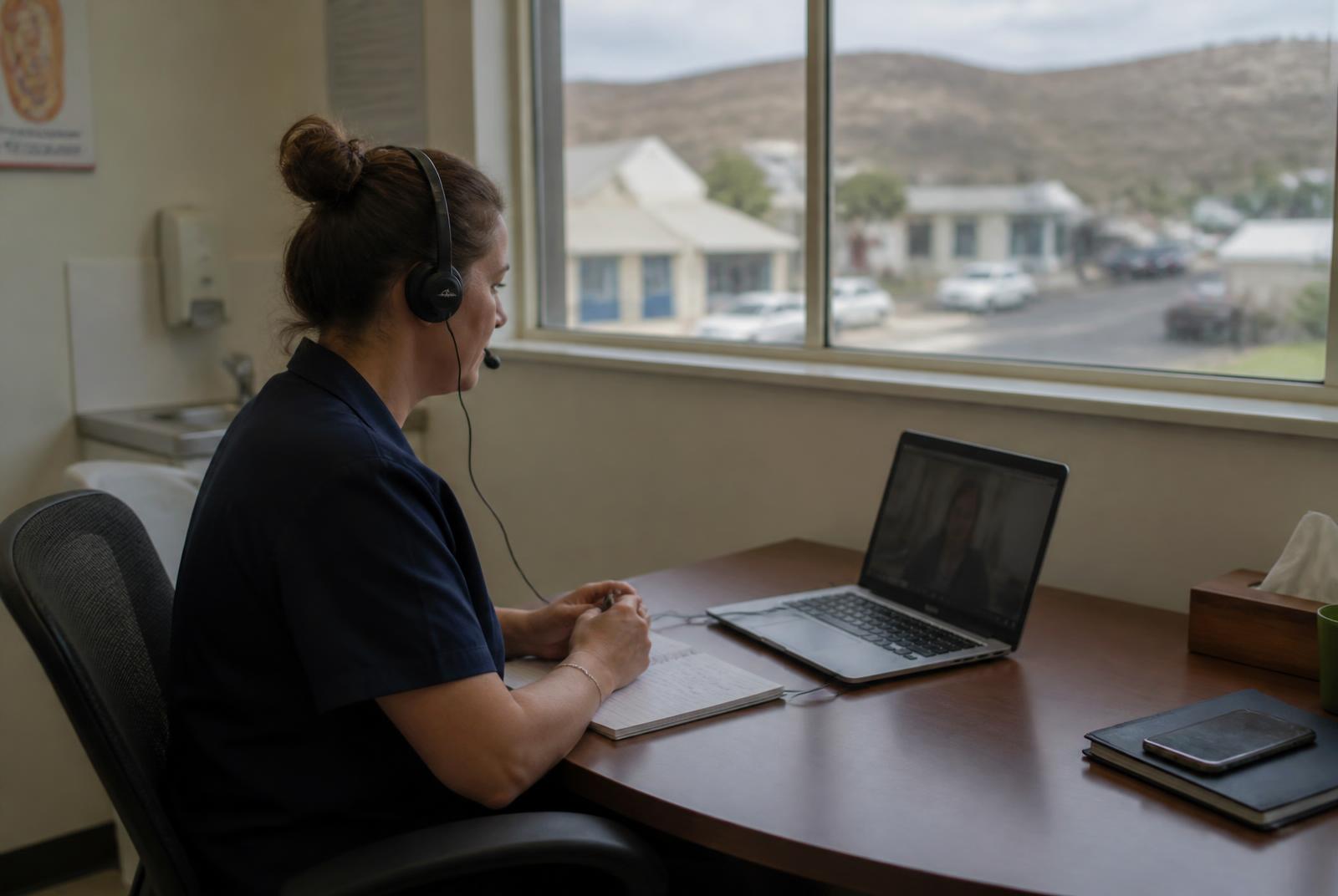
A clinician in a small regional Australian clinic room running a telehealth mental health session on a laptop
Distance changes the delivery, it should not change the record.
Regional and remote delivery

A session from a country clinic room carries the same weight as one in the city.

Telehealth, outreach and hub sessions all land on the same client record with the same outcome tools and the same safety plan. Clinicians covering several towns see one caseload, and the executive sees one consolidated view across every site delivering the model.

  • Telehealth and in person contacts on one continuous record
  • Site level control with a single network view
  • Travel and remote delivery captured for funding evidence
Lived experience workforce

Peer work belongs in the record, with the right boundaries.

Peer workers, recovery coaches and consumer and carer representatives are part of the care team. Konetic One gives each role a view that is scoped to their practice, not an all or nothing switch.

Role aware access
Each role sees the right slice of the same record
  • ClinicianFull episode, risk, formulation and outcomes
  • Peer workerWellness, goals, peer contact notes
  • Recovery coachNDIS plan, capacity building, coordination
  • Team leaderSupervision, caseload, deterioration flags
  • Consumer and carerTheir own plan and progress, with consent

Peer contact recorded properly

Peer sessions, groups and check ins are recorded as service activity, so peer work is counted in funding, workload and outcomes rather than sitting outside the system.

Supervision built for the role

Peer supervision, reflective practice and boundaries are supported with their own supervision records, separate from clinical supervision.

Consumers and carers can see their own plan

With consent, the consumer sees their goals, appointments, wellness plan and progress in the client portal and mobile app.

A peer support worker and an older woman talking over cups of tea on a bench outside an Australian community centre
Peer work is real clinical value, and it deserves to be visible in the data.
Lived experience workforce

The conversation that changes someone's week is usually the least documented one.

Peer workers and recovery coaches build trust that no assessment tool captures. Konetic One gives them a view scoped to their practice so their contacts, reflections and escalations are recorded as service activity, with supervision and currency tracked alongside.

  • Field level access shaped to scope of practice
  • Peer contacts counted as service activity
  • Supervision, currency and reflective practice tracked
Care journey

From first referral to warm handover, one continuous record.

  1. 1

    Referral and triage

    GP, emergency department, self and youth service referrals enter one intake with K10, presenting issues, risk screen and step suitability captured up front.

  2. 2

    Assessment and plan

    Biopsychosocial assessment, formulation, recovery goals and safety plan are co designed with the consumer and visible to the whole care team.

  3. 3

    Active episode

    Sessions, groups, telehealth, peer work and recovery coaching are recorded in one timeline, with outcome tools captured inside the session.

  4. 4

    Review and step

    Change in K10 and HoNOS is visible against thresholds, prompting step up to higher intensity, step down, or transition to community supports.

  5. 5

    Exit and continuity

    Closure, wellness plan, relapse signals and warm handover to a GP, recovery coach or community service, with a consent based summary.

Outcome tools in session

K10, K5, DASS 21, ORS, SRS and HoNOS scored instantly with change visible to the consumer.

Cohort and board reporting

Outcome attainment, wait times, retention and risk trends rolled up by program and site.

Groups and programs

Group programs, attendance and outcomes recorded alongside individual episodes.

Consumer portal and app

Appointments, goals, wellness plan and secure messaging, with consent controlled by the consumer.

Where the model of care actually lives

Three rooms, one record.

A reception desk, a telehealth session and a team huddle look nothing alike, but the same client record sits underneath every one of them.

A calm reception area in an Australian community mental health service, a staff member greeting a client
The reception desk, where the first conversation of an episode actually starts.
A small regional Australian mental health clinic room with a clinician preparing for the day's sessions
The regional clinic, where distance changes the delivery but not the record.
A multidisciplinary Australian mental health team gathered around a table reviewing a caseload
The team huddle, where the caseload is already visible before anyone opens a laptop.

The sector as it actually runs

Six problems every Australian community mental health provider is managing right now.

These are the constraints we hear in every implementation conversation, and each one is a design decision inside the platform rather than a feature bullet.

01

Demand arrives faster than capacity

Referrals climb while the workforce does not. Without visible waitlists, priority rules and step level capacity, triage becomes guesswork and the people waiting longest are rarely the people waiting most dangerously.

In Konetic One. Live waitlist per step and site, priority and target contact times set at triage, and escalation when a target is breached.

02

The record fragments across programs

A person moves between a PHN funded therapy episode, a psychosocial support program and an NDIS arrangement, and each one holds a different version of them. Risk history is the first thing to fall through the gap.

In Konetic One. One client identity across every site, program and funding line, with episode level access control and organisation wide duplicate detection.

03

Reporting eats clinical time

PMHC MDS, PHN performance reporting, board packs and acquittals all draw on the same activity, yet each is assembled separately, usually by the people who should be delivering care.

In Konetic One. Reporting reads from the clinical record, with pre-flight validation and one definition of a session, an episode and an outcome.

04

Risk continuity depends on individuals

The clinician who knows the person is on leave. The safety plan is a document somebody saved somewhere. The follow up after an acute presentation is remembered rather than scheduled.

In Konetic One. Structured safety plans pinned to the client header, risk driven review cadence, and aftercare follow up managed as tracked tasks.

05

Outcomes are collected but not used

Baseline measures get captured at intake and review measures do not, so the service can report volume but cannot evidence change, which is precisely what commissioners now ask for.

In Konetic One. Measures collected in session with instant scoring, collection occasions enforced, and change plotted per person and per cohort.

06

The lived experience workforce is left outside the system

Peer workers and recovery coaches are core to the model of care yet are given either full clinical access or none, so their work is invisible in the data and their governance sits in spreadsheets.

In Konetic One. Field level access shaped to scope of practice, peer contacts recorded as service activity, supervision and currency tracked.

A multidisciplinary Australian mental health team reviewing a caseload around a whiteboard in a bright office

“Every hour spent reconciling three systems is an hour not spent with the people waiting.”

Team leader, multidisciplinary mental health service, illustrative
Operating brief

Running a community mental health service in Australia, in plain terms.

The National Standards and the NSQHS mental health module

Community mental health providers are assessed against the National Standards for Mental Health Services, and services operating within a health setting also carry the mental health module of the National Safety and Quality Health Service Standards. Both expect evidence of rights based practice, safety and clinical governance operating day to day, not a policy binder produced for the survey. Konetic One tags intake, risk screening, care planning and complaints evidence to the standard it satisfies as the work happens, see compliance evidence.

PMHC MDS reporting

Services commissioned through a Primary Health Network report activity into the Primary Mental Health Care Minimum Data Set, covering consumer demographics, episode detail, session activity and outcome measures. Missing or inconsistent fields discovered only at submission time turn a routine data return into a rework exercise against a deadline. Konetic One validates the required PMHC MDS fields as the episode runs, so the export at submission time is already clean, see regulatory reporting.

Stepped care and PHN commissioning

PHN commissioned stepped care assumes a person moves between low intensity, moderate, high intensity and acute responses as their need changes, with intake criteria, session caps and outcome review points defined for each step and reported back to the commissioning PHN against contracted volumes. A service running stepped care on instinct rather than defined thresholds struggles to prove the model was actually followed. Konetic One configures each step's intake criteria and review points and reports activity against contracted volumes, see funding.

K10 and outcome measures

The Kessler Psychological Distress Scale, K10, along with tools such as K5, SDQ and HoNOS depending on the cohort, are the standard way Australian mental health services demonstrate that an episode of care actually changed something. Tools administered on paper at intake and again at exit, if at all, rarely produce a usable trend line. Konetic One captures outcome tools inside the session itself and builds the change graph automatically, visible to consumer, clinician and supervisor, see outcome measures.

Capability map

What a mental health service must do, and where it lives in the platform.

What the sector must doHow Konetic One does itPlatform feature
Evidence the National Standards and NSQHS mental health moduleTags intake, risk and care planning evidence to the standard as it happensCompliance evidence
Submit clean PMHC MDS extracts to the PHNValidates required fields as the episode runs, not at submission timeRegulatory reporting
Run stepped care thresholds and PHN contract reportingConfigures intake criteria and review points per step, reports against volumesFunding
Capture K10, K5 and HoNOS at the point of careAdministers outcome tools inside the session and builds the change graphOutcome measures
Run suicide safety planning as a live workflowThe Stanley Brown safety plan and caring contact follow up sit inside the recordWorkflow automation
Roster clinicians, peer workers and recovery coachesSchedules caseload, groups, telehealth and outreach with weight visible per workerRostering
Give consumers and carers visibility of their own planA branded portal shows goals, sessions and progress with consent controlsClient portal
Surface deterioration and review flags to the teamRuby raises outcome change, missed reviews and approaching deadlines as they ariseRuby
A community mental health worker sitting with a client at their kitchen table during a home visit
Reach is a service outcome, not just a travel line item.
Coverage that funders can see

A network view that includes the work that happens off site.

A regional or multi site service rarely delivers all of its care from a desk. Outreach visits, home contacts and community based sessions sit on the same map as clinic appointments, so the executive view of coverage matches what actually happened in the community.

  • Outreach and home visits recorded with the same rigour as clinic sessions
  • Coverage visible by catchment, not just by site
  • Travel and remote delivery evidence ready for a funding conversation
Go deeper

Detailed guides for each part of the mental health model.

Each guide covers the problem, how Konetic One handles it and the questions providers ask before committing.

Providers who deliver more than mental health

Most community mental health providers hold contracts in neighbouring sectors. Konetic One covers fifteen of them on one platform, so a person known to two programs is one record.

The capabilities underneath

The mental health model is assembled from the same platform capabilities every sector uses, configured for clinical work.

Questions from providers

Plain answers for serious buyers.

Bring a real episode of care to the demo.

We will map your stepped care model, outcome tools, safety planning, peer workforce and reporting obligations against the platform, then show you the record it produces.

Sign in Book demo